


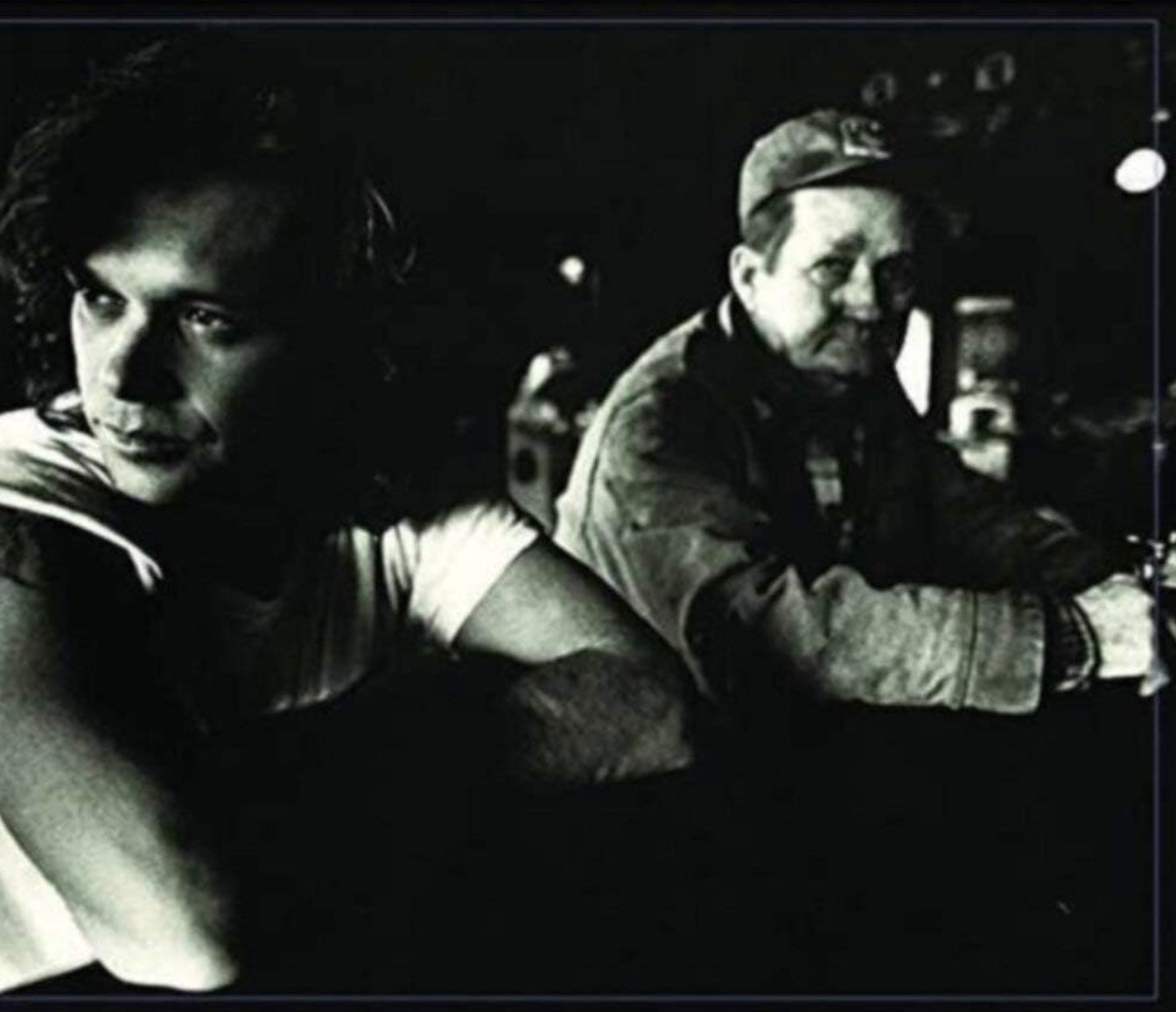
By 1987, Ronald Reagan was coming to the tail end of his second term. He had challenged Mikhail Gorbachev to “tear down this wall,” absorbed the political damage of Iran-Contra, imposed tariffs on Japanese semiconductors, and confirmed Alan Greenspan as Chairman of the Federal Reserve. On television, Reagan’s America looked triumphant. In the Midwest, the story was quieter.
Confidence at the podium did not translate to stability in the Midwest.
Recorded from late 1986 into the summer of 1987 and released that August, The Lonesome Jubilee shifts the lens inward. Where Scarecrow confronted the structural blows, foreclosures, banks, and doctrine, The Lonesome Jubilee documents the people left standing after the initial impact. The crisis is no longer just economic. It is cultural. Spiritual. Communal.
If Scarecrow was indictment, The Lonesome Jubilee is the aftermath.
Just as he had done with both Uh Huh and Scarecrow, Mellencamp fires a shot across the bow again with the album’s opener, “Paper in Fire”. A life worth living is always just out of reach:
There's a good life
Right across the green fields
And each generation
Stares at it from afar
The anger of 1985’s Scarecrow gives way, in 1987, to something more complicated: fatigue. The belt-tightening became routine. The constrictions became normalized. Mellencamp’s protagonists are not marching in protest; they are enduring.
The sardonic “Check It Out” captures that uneasy balance between aspiration and disillusionment:
A million young poets screaming out their words
To a world full of people just living to be heard
Future generations, riding on the highways that we built
I hope they have a better understanding
Going to work on Monday
(Check it out) got yourself a family
(Check it out) all utility bills have been paid
You can’t tell your best buddy that you love him
On the outside, it may have looked like Reagan’s America was winning, with a strong dollar, expanding markets, and military dominance. But in the Midwest, the landscape told a quieter story. The farms that survived were larger. The factories that remained were leaner. The banks were fewer. What had collapsed earlier in the decade did not return; it consolidated. The emergency had passed, and the structure had changed. That is the world The Lonesome Jubilee inhabits.
By The Lonesome Jubilee, the damage has settled in. The collapse isn’t loud; it’s lived-in. The album feels less accusatory and more haunted. The rage of Scarecrow gives way to something more established and subtle in The Lonesome Jubilee. Fiddles and accordions wrapped around stories of drift, compromise, and quiet disillusionment. If Uh-Huh asks what’s happening, Scarecrow says who’s responsible, and The Lonesome Jubilee asks what it costs us. We find these characters “Down and Out In Paradise”:
Dear Mr. President
I live in the suburbs
It’s a long way from Washington, D.C.
Had me a job
Working for wages
And they forgot about me
Can’t draw unemployment
For some unknown reason
My kids are hungry
I’ve got four mouths to feed
I go out every day lookin’ for suitable
Employment
Do you think, there’s something
You could do for me
Cause I’m
Down and out here in paradise
Down and out and I’m on my knees
I’m down and out, here in paradise
Looks like the milk and honey
Done run out on me
The most unsettling part wasn’t the inequity of Reaganomics, but the calm belief that the market would sort it out, even as communities collapsed. The Lonesome Jubilee doesn’t shout about collapse; it lives inside its aftermath. The protagonists in these songs don’t expect much and receive even less, yet Mellencamp renders them heroic simply by surviving - by enduring life with “Empty Hands.”
In the shadows of the smokestacks
Through the black snow, that lay on the land
Walked home one winter morning
With my life savings in my hand
Maryanne, she’s fixin’ up some breakfast
Got the lights on, on the Christmas tree
Sittin’ there, lookin’ up at an angel
With something dyin’ inside of me
Grew up with great expectations
Heard the promise and I knew the plan
They say people get what they deserve
But Lord, sometimes it’s much worse than that
Maryanne, she takin’ in some laundry
I got a part-time job in a drive-in stand
Oh Lord, what did I do
To deserve these empty hands
Across the cities
Across this land
Through the valleys
And across the sand
Too many people standing in line
Too many people with nothing planned
There’s too many people with
Empty hands
If Scarecrow indicted the doctrine, The Lonesome Jubilee documented its residue.
This wasn’t just metaphor. It was measurable. Beneath the statistics and policy debates lay something darker. The farm crisis produced a spike in suicides, despair turning private where protest had failed. According to the National Rural Health Association (NRHA), farmers’ suicide rate is three and a half times greater than that observed in the broader population.
With “Crumbin Down” off of Uh-Huh, “Second best is what you get until you learn to bend the rules.” That sentiment is mirrored on The Lonesome Jubilee in “Hard Times For An Honest Man,” where our character tries to maintain dignity under erosion:
One man does his work
He's not satisfied not at all
Feels like that he's being used
His self-respect starts to fall
His frustration
Running very very high he takes it out
On the ones he loves, because it's safe
And who they gonna tell
And he hates that cold-bloodedness
That runs inside
Oh yes.
It’s hard times, for an honest man
Very, very hard times
Hard times, for an honest man
Very, very hard times
The sound on The Lonesome Jubilee was a departure for Mellencamp. Having added fiddle player Lisa Germano and multi-instrumentalist John Cascella, the album provides a more layered and textured sound for his songs. They helped reshape the sound by replacing arena gloss with folk textures, almost creating a genre that only he belonged in.
Eschewing mainstream rock was a bit risky coming off one of Mellencamp’s most successful albums, but it paid off even though it sold two million fewer than Scarecrow. The Lonesome Jubilee sold over three million copies in the United States, about the same as Uh Huh. Hardly a disappointment.
Next up is Big Daddy (1989), Mellencamp’s final statement of the decade. If The Lonesome Jubilee lived in the aftermath, Big Daddy pushes further into the reckoning. The optimism some felt during the Reagan years was thinning, the culture wars were sharpening, and the fractures Mellencamp had been tracing all decade were no longer subtle. The anger returns, older now. Wiser. Quieter. Less surprised.
In the final installment, we’ll see how Mellencamp closed out the 1980s not with nostalgia, but with confrontation, and why Big Daddy may be his most unsparing portrait of not only America, but of his place in it.
Thanks for the reminder of how good mainstream '80s rock could be....
Great Article. In my Opinion, it was his best Album and one of the Top Albums of the 1980s. You felt his characters listening to the songs. Well Done